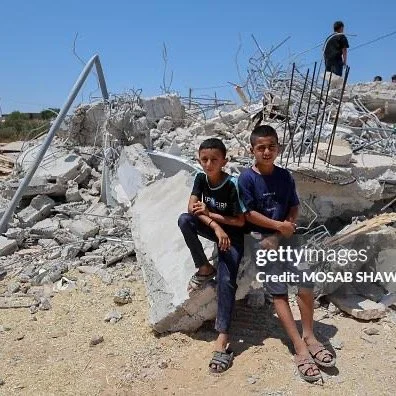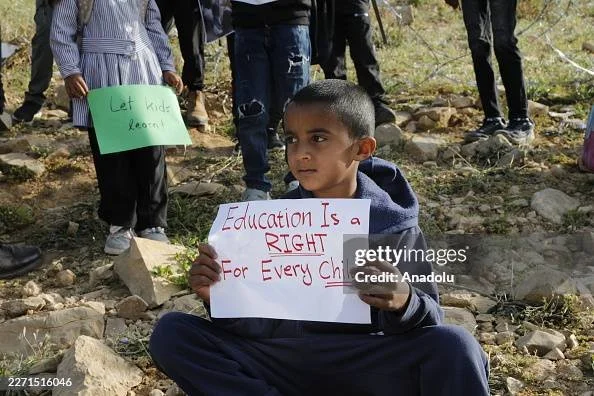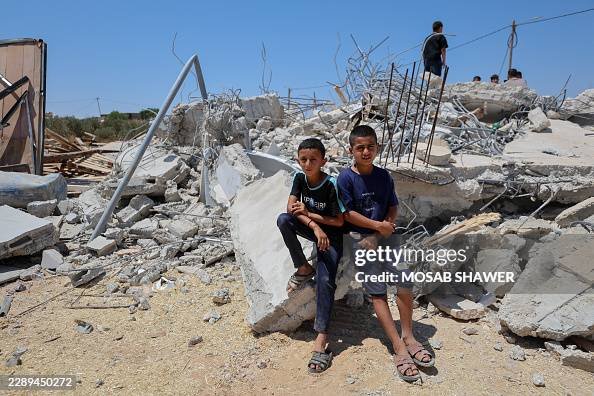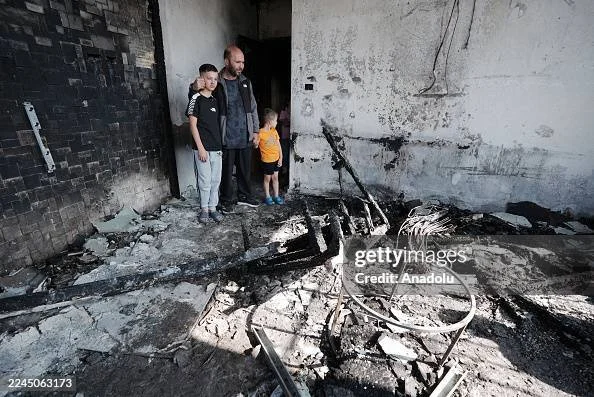
Please pray that 9-year-old Khalid and his siblings have a decent protective shelter, that they have clean water to drink, and that they receive needed nourishment. Pray that the place where Khalid and his family live is free from rats, lice, waste and other health hazards. Pray that there is a learning space where he and his siblings and friends can receive education and psychosocial support.
Please pray also this prayer for all Palestinians which comes from the Sabeel Christian Theology Center in East Jerusalem: Liberator Christ, as we walk and reflect on your journey to the tomb and your resurrection, we remember that oppression cannot last forever, for you have risen and the tomb is empty. Give us the fire of the Holy Spirit that reminds us that even if the might of empire makes us afraid, you are sovereign and above all. Protect us and remind us of our mandate to practice revolutionary love. Lord in your mercy…hear our prayer.
Context
Despite the ceasefire established in October 2025, nearly all of Gaza’s 2.1 million residents remain displaced, living in over 1,000 displacement sites. Approximately 81% of sites are makeshift, consisting of spontaneous, sub-standard structures like worn-out tents and plastic sheets that offer little protection from harsh weather. Displaced residents are increasingly pushed into smaller areas—estimated at just 42% of the territory—due to expanding military zones, leading to unprecedented levels of overcrowding where safe living space is virtually non-existent.
In February 2026, the United Nations began a survey of all the displacement sites. The objectives of the survey are to confirm site status (active, inactive, or not found), identify sites that are newly established or not previously recorded, and to record site conditions and service gaps.
Below are some of the data collected through 10 March 2026:
The 1078 displacement sites surveyed by 10 March represent 269,976 households or 1,298,910 individuals.
80% of displacement sites are makeshift sites.
The surveyed sites include 80,000 individuals with chronic illness, 6,000 unaccompanied children, 45,000 pregnant and lactating women, 36,000 female headed households; 3000 child headed households; and 22,000 people with physical disability.
The top 3 priority needs identified by residents are shelter, household items, and personal hygiene items.
Information requested in the survey includes the following:
The percent of people in each site with adequate water for drinking and cooking in the last 30 days
The primary water distribution point in each site- a well, water truck (81%), storage tank, water seller, desalinization plant, or tap
The type of food assistance received by residents in each site in the last 30 days- cooked meals, food parcel, bread, flour, fresh produce, or cash assistance
The main energy source of residents in each site for cooking- firewood, garbage, gas, other
The traces of environmental health hazards found by residents within or around each site- rodents, sewage, solid waste, stagnant water, dead animals
The presence of a temporary learning space in each site
Key Site Verification & Humanitarian Findings
Infrastructure Deficits: Only 11% of monitored sites (101 sites) have communal lighting, leaving most in darkness after nightfall and elevating risks, especially for gender-based violence.
Sanitation Crisis: Approximately 26% of sites (over 250 locations) lack any latrines, leading to widespread open defecation. Solid waste has accumulated for over 30 days at more than 50% of the surveyed sites.
Health: Humanitarian partners report alarming rates of ectoparasitic, lice, scabies, rat and other pest infestations in displacement sites. Over 83% of the sites report infestations of rodents and pests. Skin diseases are widespread in 48% of the sites. Between 1 and 6 April alone, the Site Management Cluster received 41 alerts from partners reporting rodent infestations, with requests for hygiene items and pest control support.
Management Gaps: Only 46% of displacement sites have a trained management agency present to handle operational challenges.
Education: less than 60% of the recognized displacement sites have an established, formal temporary learning center. Widespread community-led education efforts take place in tents and rubble.
Additional reading and watching:
https://www.ochaopt.org/content/humanitarian-situation-report-10-april-2026