Please pray this week that Khalid is safe from unexploded ordnance (UXO)

LET CHILDREN LIVE. PLEASE PRAY FOR KHALID

Please pray this week that Khalid is safe from unexploded ordnance (UXO)

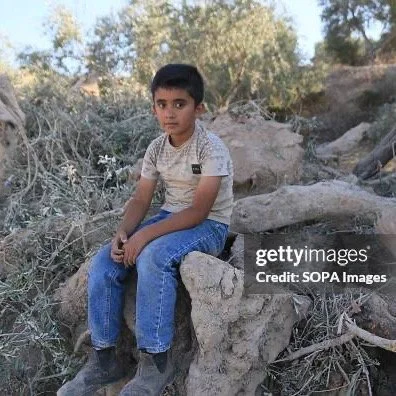
Pray that 9-year-old Khalid and his family have not been injured by unexploded ordnance hidden in the rubble of destroyed Gazan buildings. Please pray that Khalid and his family have learned from experts about the dangers of UXO and are taking appropriate precautions. Please pray that children and adults injured by UXO are able to receive the medical care they need. Pray that personnel in organizations working to educate Gazans about UXO dangers have the energy, patience, supplies and materials they need to work effectively. Pray that the ongoing bombing in Gaza ends so that the huge task of clearance and reconstruction may begin.

Context: Unexploded Ordnance (UXO) in Gaza

  • Massive Contamination: An "absolutely immense" level of contamination exists across Gaza due to intensive combat and explosive devices deployed by both sides. Experts estimate that between 5% and 12% of munitions fired have failed to detonate, leaving an estimated 200,000 tons of UXO- bombs, missiles, rockets, and artillery projectiles - hidden among an estimated 61 million tons of rubble- the capacity of nearly 3,000 container ships .The munitions remain highly unstable and can explode if disturbed.

  • Daily Risk to Civilians: The presence of UXO makes daily life perilous. Nicholas Orr, Explosive Ordnance Disposal expert for Humanity and Inclusion in Gaza, says, “Every Gazan person is now living in a horrific, unmapped minefield. The UXO is everywhere- on the ground, in the rubble, under the ground, everywhere.” Orr indicates, “We are especially concerned about the risk to children.” They remain particularly exposed while searching for firewood and plastic in and around displacement sites.

  • Hindered Humanitarian Response and Reconstruction: The UXO danger prevents the safe delivery of aid, assessment of needs, and the return of displaced residents. It is a major obstacle to rebuilding essential services like hospitals, schools, and public infrastructure. Humanitarian mine action is an essential prerequisite for all recovery and reconstruction efforts, including debris management and rubble removal.

  • Current Actions: No humanitarian clearance is currently taking place in Gaza. For humanitarian mine action organizations, conditions remain too unsafe for operations. Instead, organizations are primarily focused on conducting explosive hazard assessments on aid routes and delivering critical, life-saving risk education sessions to the population.

    • From January 8-11, two Explosive Hazard Assessments were conducted in Gaza City.  During the same period, mine action partners conducted 62 Explosive Ordnance Risk Education and Conflict Preparedness and Protection sessions, reaching 1,394 people and four targeted sessions for 89 humanitarian workers.

    • From January 12-14, mine action partners conducted 63 Explosive Hazard Assessments in An Nuseirat, northern Deir al Balah, in support of debris removal activities.

  • Complex Clearance Challenges: Much of the ordnance is buried deep within infrastructure and rubble, making detection and disposal extremely difficult. The high population density and urban environment further complicate clearance operations, which require specialized equipment and a stable security environment that is currently lacking. In addition, there are restrictions on bringing in key equipment to support operations in Gaza and capacity limitations due to challenges that INGOs face in operating in Gaza (security concerns; new registration processes)

  • Long-Term Problem: Mine action experts from organizations like the UN Mine Action Service (UNMAS) warn that it could take decades—perhaps more than 30 years—to clear the surface of Gaza and ensure it is safe.

  • Key needs: Advocacy for humanitarian mine action to be allowed to deliver responsibly and unhindered throughout the Occupied Palestinian Territories.  Predictable and flexible funding for humanitarian mine action to Gaza in 2026 and beyond.

Please pray this week that Khalid is protected from the impact of winter storms

Please pray this week that Khalid is protected from the impact of winter storms

Pray that 9-year-old Khalid and his family are sheltered in a structure safe from water and wind damage and safe from collapse. Please pray that Khalid has warm clothes and a warm dry bed. Please pray that Khalid and his family are safe from the misery of contaminated water, sewage, water born disease, and upper respiratory infections. Please praise God for all aid organization personnel working persistently to address the crises caused by winter rains and flooding. Please pray for their strength, their health, and their hope. Please pray that the aid supplies needed are allowed entry into Gaza.

Context: Winter in Gaza

  • The rainy season in Gaza typically lasts from November to March, with the most rain falling in January. Winter rains have battered Gaza since mid-November 2025. Hundreds of thousands of Palestinians in Gaza have struggled in makeshift tents damaged by rain, wind and seawater waves. Homes collapsed under storm conditions, and personal belongings were soaked. In several locations, entire displacement sites were flooded due to inadequate drainage and low-lying terrain.

  • Flooding: The heavy rainfall led to widespread flooding, especially in the sprawling tent camps housing displaced Palestinians. Residents struggled to dig trenches and protect their belongings as water cascaded through their makeshift shelters.

  • Shelter Damage: The downpours damaged or destroyed a significant number of tents, many of which were flimsy and made from salvaged materials like tarpaulins and blankets, offering minimal protection against the weather. By late December 2025, reports indicated that more than 110,000 out of 135,000 tents had been destroyed or rendered unusable.

  • Health and Sanitation Crisis: The collapse of water and sanitation systems meant that raw sewage overflowed into the streets and flooded areas, contaminating water sources and increasing the risk of waterborne diseases. The lack of functional drainage systems worsened the flash flooding. Humanitarian organizations addressing water and sanitation have indicated that flood mitigation requires the urgent entry of specialized equipment, such as pumps, pipes and other electromechanical components, which continue to be denied entry. A consistent supply of fuel is also required.

  • Humanitarian Woes: Aid organizations and the UN warned that the winter conditions, combined with severe restrictions on aid, marked a dangerous escalation of suffering. The cold temperatures, strong winds, and wet conditions led to increased health risks and immense misery for the displaced population.

  • On 28 December, the Palestine Civil Defense reported that its teams recovered the bodies of a 30-year-old woman who died due a wall collapse and a seven-year-old child who drowned in a well during the storm. According to the Ministry of Health (MoH) in Gaza, so far in December, 17 people died due to the collapse of damaged buildings and three children died of hypothermia. Médecins Sans Frontières (MSF) teams report consistently high rates of respiratory infections, warning that these will increase throughout the winter.

  • As of Dec 30th, the UN Office for Coordination of Humanitarian Affairs (OCHA) indicated since early December, Shelter Cluster partners reached over 80,000 households (approximately 448,400 people), providing 37,740 tents, 127,860 tarpaulins and 94,980 bedding items. In addition, almost 20,650 households were provided with winter clothing through in-kind as well as cash and voucher assistance.

  • Between 5 and 8 January, OCHA reported partners provided shelter assistance to approximately 21,735 households affected by the recent rainstorms across the Gaza Strip. This included tents, tarpaulins, sealing-off kits, kitchen sets, mattresses and bedding sets, and non-food item assistance through in-kind and vouchers

  • UN partners working in the shelter sector stressed that “tents cannot serve as the primary and sole shelter modality in Gaza, as they provide only temporary cover.” They highlighted the urgent need to accelerate the shift to more durable solutions.

Please pray this week that Khalid gets the health care he needs

Please pray this week that Khalid gets the health care he needs

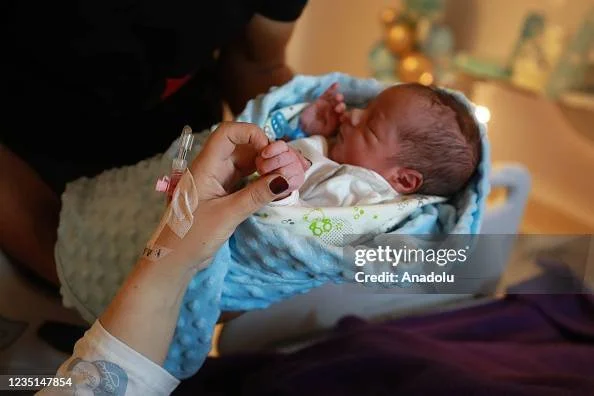
Pray that 9-year-old Khalid has access to medical facilities, supplies and personnel as needed for any injury or illness- shooting, building collapse, ordnance accident, water and refuse contamination, anything he might encounter. Pray that he remains well in the harsh Palestinian winter rains which have flooded many tents. Pray for his speedy evacuation with a family member in the event of illness or injury untreatable in Gaza. Pray that if Khalid becomes separated from his family or is in any way being abused that he will be assisted by a caring social worker. Pray that Israel will lift the ban imposed on 37 humanitarian organizations- including Doctors Without Borders- that they might continue to address the humanitarian crisis in Gaza- caring for all Palestinian children and their families. Pray for all healthcare workers in Gaza- for energy, for perseverance, for hope, for rest, for necessary lifesaving supplies and equipment.

Context: The current medical/ healthcare situation in Gaza

  • Since the October 2025 ceasefire, the Israeli army has remained deployed in areas east of the so-called “Yellow Line,” which cover more than 50 % of the Gaza Strip. Major hostilities stopped; however, airstrikes, shelling and gunfire continue. By 10 December, the Ministry of Health in Gaza reported 379 new post- ceasefire conflict-related deaths and 992 injuries. Two children, brothers aged 10 and 12, were killed when they inadvertently crossed the invisible yellow line as they gathered firewood to help their wheelchair-bound father.

  • Children in Gaza are dying from the harsh winter and rainstorms. At least 16 Palestinians have died due to freezing temperatures, heavy rainfall and collapse of storm damaged buildings.

  • By mid-December,18 out of 36 hospitals and 89 of 195 primary health care facilities were partially or fully functioning. 55 health service points re-opened or were newly established across the Gaza Strip including one field hospital, 11 primary health care centers and eight medical points. Between 11 Nov- 11 Dec the UN and its partners set up 120 intensive care and emergency beds and provided 30 anesthesia machines and 40 portable vital-sign monitors to health facilities, alongside critical medicines and consumables.

  • Despite a significant increase in the volume of supplies entering Gaza, basic survival needs are only partly being met, and essential medical supplies, sanitation and hygiene services, construction materials, and agriculture inputs are still limited.

  • As of 10 December, 35 emergency medical teams (EMTs), including a total of 85 international staff, were deployed across Gaza, delivering specialized care to fill the critical service shortfall. In November, these teams conducted 115,700 consultations, 1,215 emergency surgeries and 591 trauma referrals.

  • Between 1 November and 8 December, medical evacuation of 114 patients was facilitated, including 99 children, 7 women, and 8 men, with 381 companions. However, over 16,500 patients, including 4,000 children, in urgent need of evacuation for specialized treatment remain blocked in the Strip. Reportedly, 1,000 patients died while waiting to be referred outside for medical treatment.

  • During the second month of the ceasefire, over 5,200 children at risk, including unaccompanied and separated children and children experiencing neglect, violence or abuse, were identified and supported through one-on-one social work interventions. 287 children were reunited with their families, and 398 were placed in temporary alternative care.

  • As of Jan 1, 2026, Israel suspended 37 humanitarian organizations, including Doctors Without Borders and CARE, from operating in Gaza for failing to comply with its new registration rules. These rules disqualify organizations that have called for boycotts against Israel or expressed support for any of the international court cases against Israeli soldiers or leaders. The United Nations and many aid groups urged the international community to take immediate and concrete actions to press the Israeli authorities to lift all obstacles to humanitarian access and NGO operations in the Gaza Strip.

Please pray that Khalid gets the nutrition he needs each day

LET CHILDREN LIVE. PLEASE PRAY FOR KHALID

Southminster has joined Churches for Middle East Peace (CMEP) Let Children Live campaign to pray and advocate for the children of Palestine.

We have received the name of a child to lift in prayer and advocacy. Our child is 9-year-old Khalid. We do not have his photo. We can only imagine the reality of his life. Please begin praying today that Khalid may live and that he may know peace.

Please pray that Khalid gets the nutrition he needs each day

Please pray that Khalid and his family are able to access nutritious food to sustain life and growth. Please pray they continue to receive uninterrupted food supplies which give hope to Khalid and his family. Please pray that any family food supplies remain safe from soaking winter rains. Please pray that supplies of food stuffs including meat, chicken and fresh vegetables are able to enter Gaza without challenge and swiftly be distributed. Please give thanks to God for all the UN partner organizations providing general food assistance and for the 208 community kitchens providing nutritious hot meals to Gazans.

The food situation in Gaza

  • In August 2025 the World Food Program (WFP) indicated that over half a million people in the Gaza Strip- including children- were facing catastrophic hunger- characterized by starvation, destitution and death- and over 1 million more were facing Emergency levels of food insecurity. This represents the vast majority of the population of Gaza.

  • In October 2025 WFP reported the Palestine/ Israeli conflict has led to a complete collapse of Gaza’s food production, job market, economy and infrastructure. More than 80% of Gaza’s farms, bakeries and food storage facilities have been destroyed. Virtually all marketplaces, grocery stores and restaurants are closed or destroyed. Jobs at fisheries and farms, once major sources of employment, are gone. After two years of war, most Gazans no longer have any cash so cannot afford what little food might be available. These catastrophic conditions have left Gazans dependent on humanitarian aid.

  • The ceasefire opens a critical window for WFP to scale up and deliver lifesaving food, but it will take months to reverse famine and pull people back from starvation. Hundreds of thousands of families remain displaced. Most are returning to find their homes completely destroyed, damaged or unsafe. Severely malnourished women and children need specialized, weeks-long treatment to recover.

  • In the first half of December the UN Office for Coordination of Humanitarian Affairs (OCHA) reported the following:

  • In the first 10 days of December, Food Security Sector partners reached 73,000 households (about 365,000 people) with the monthly cycle of general food assistance via 60 distribution points across the Strip. This represents 17 per cent of the 2.1 million people that partners aim to reach with household-level food distributions each month.

  • As of 10 December, 1,571,000 meals continued to be prepared and delivered daily by 26 partners through 208 kitchens - 366,000 meals by 45 kitchens in the north and 1,205,000 meals by 163 kitchens in south central Gaza.

  • Since 12 December, due to limited supplies caused by challenges to humanitarian aid entering Gaza, UN partners have been unable to maintain the standard family ration of two food parcels and one 25-kilogram flour bag (covering 75 per cent of minimum caloric needs). For the remainder of the month, the ration has been reduced to one food parcel, one flour bag, and 1.5 kilograms of high-energy biscuits, covering approximately 50 per cent of minimum caloric needs per family.

  • 18 WFP bakeries are running as of early December. They are producing 160,000 two-kilogram bundles of bread daily. The goal is to eventually have 25 to 30 bakeries operational to meet the immense needs across Gaza.

  • On 5 December, for the first time since August 2024, some 3,500 veterinary kits entered Gaza via UN coordination. On 9 December, the first day of the kits’ distribution, over 130 herders received essential supplies to support the health of their animals. Since 10 October, UN partners have also supplied fodder to 1,700 animal herders to sustain surviving livestock and enable the resumption of local production of milk and dairy products.

  • In addition to soaking Gazans tents, blankets, clothing and any food supplies, winter rains in Gaza periodically impact the functioning of community kitchens and of aid distribution.

Pray that Khalid receives mental health and psychosocial support

Pray that Khalid receives mental health and psychosocial support

Southminster has joined Churches for Middle East Peace (CMEP) Let Children Live campaign to pray and advocate for the children of Palestine- (Gaza and the West Bank).

We have received the name of a child to lift in prayer and advocacy. Our child is 9-year-old Khalid. We do not have his photo. We can only imagine the reality of his life. Please begin praying today that Khalid may live and that he may know peace.

For more than two years, children in Gaza have opened their eyes every morning to another day of displacement, hunger, loss and lack of access to basic services. In April 2024, UNICEF declared that 100% of children in Gaza needed mental health and psychosocial support, an unprecedented situation. Mental health experts report pervasive trauma symptoms like nightmares, bed-wetting, and deep emotional withdrawal. Children experience intense stress, violence, and loss which disrupts brain development and leads to aggression, self-harm, and deep hopelessness.

Organizations like the Gaza Community Mental Health Program, UNICEF, IRC, UNESCO, PAMA, War Child and UNRWA provide crucial services. These include psychological first aid, play-based activities, group counseling, caregiver support, and recreational programs in child-friendly spaces. Efforts focus on helping children process trauma, build resilience, and regain a sense of normalcy through structured activities. Spanish NGO Ayuda en Accion, working in conjunction with UNRWA, is funding a plan aimed at strengthening 3,000 caregivers to recognize signs of trauma and improve communication with children, thereby creating more stable care environments. In addition, 3,000 young people are being trained as agents of resilience and community leadership, facilitating therapeutic activities that will benefit over 30,000 minors.

The World Health Organization underscores that mental health services in Gaza are currently operating at a fraction of their capacity due to recurrent violence, aid restrictions, limited supplies and resources, damaged infrastructure, lack of safe spaces, and lack of trained personnel. This reality produces severe consequences that will profoundly shape the future of Gazan society.


Please pray that Khalid and his siblings find trained and loving caregivers who provide the psychosocial support they need to address their trauma. Please pray that Khalid is able to overcome nightmares, depression, and other war related trauma. Please pray he finds reprieve from fear and sorrow by interacting with other children in games and psychosocial activities. Please pray that God heals Khalid from his anguish and fears and grants him peace.

Pray that Khalid receives an education

Pray that Khalid receives an education

Southminster has joined Churches for Middle East Peace (CMEP) Let Children Live campaign to pray and advocate for the children of Palestine- (Gaza and the West Bank).

We have received the name of a child to lift in prayer and advocacy. Our child is 9-year-old Khalid. We do not have his photo. We can only imagine the reality of his life. Please begin praying today that Khalid may live and that he may know peace.

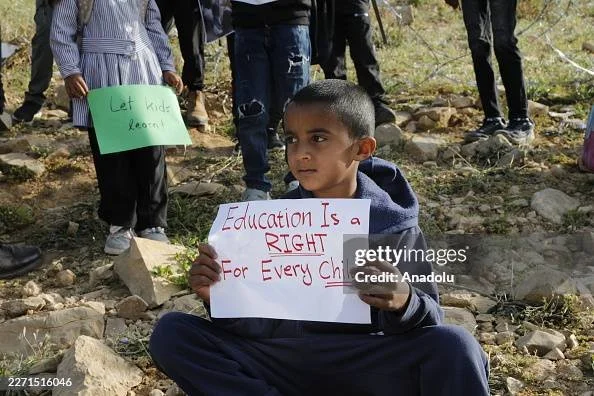
Before October 2023, the literacy rate in Gaza was one of the highest in the world- about 97-98%. The secondary education enrollment rate was 90% and for higher education 45%. The basic and secondary education system served over 625,000 students in 815 schools. Since Oct 2023 more than 97% of the schools have been damaged or destroyed with 91.8% requiring major rehabilitation or complete reconstruction. Most of the more than 600,000 school age children have had limited access to face-to-face learning for over two academic years.


Classes are now being held in tents provided by humanitarian organizations or in surviving school buildings which at night also serve as shelters for displaced people. As of Nov 4, UNICEF has provided spaces in 78 learning centers to accommodate 109,310 children in non-formal education. These enrolled students attend class 3 hours per day, 3 days per week. This provides consistent access to learning, fortified snacks, and other essential services including some psychosocial support. However, the majority of pre-school and school age children remain unenrolled due to insufficient space and lack of learning materials. Currently the IDF enforces restrictions on large scale entry of tents, and it is impossible to get educational supplies into Gaza as they are not considered lifesaving humanitarian aid. In addition, the UNICEF education team reported that in Gaza City potential learning center spaces needed to be cleared of unexploded ordinance, chemical hazards and rubble before the spaces are usable. This is likely true throughout Gaza.

Please pray that Khalid and his siblings are able to enroll for and attend school. Pray that Khalid is able to focus on learning amidst continuing trauma and uncertainty. Pray that his teachers and classmates are an encouragement and his classroom is a safe refuge for him. Pray that his teachers are able to use meaningful, creative teaching techniques that meet the needs of the children. Pray that the children continue to prioritize education and that they have hope for a decent future. Pray that Khalid finds solace in education.

Pray That Khalid Has Water

Pray That Khalid Has Water

Southminster has joined Churches for Middle East Peace (CMEP) Let Children Live campaign to pray and advocate for the children of Palestine- (Gaza and the West Bank).

We have received the name of a child to lift in prayer and advocacy. Our child is 9-year-old Khalid. We do not have his photo. We can only imagine the reality of his life. Please begin praying today that Khalid may live and that he may know peace.

The average American uses about 82 gallons (310 liters) of water per day for indoor and outdoor household use. Average daily consumption in Israel is around 247 liters a day, according to the Israeli human rights group B’Tselem. The United Nations says the minimum emergency level of water consumption per person is 15 liters a day for drinking, cooking, cleaning and washing. Bushra Khalidi, humanitarian policy lead for the aid agency Oxfam in the Israeli-occupied Palestinian territories, said average consumption in Gaza is now just 3 to 5 liters a day.

Thirsty Gazans scour the shattered Gazan landscape for any source of water. Most water and sanitation infrastructure has been destroyed. Most residents rely on wells tapped into a brackish aquifer now contaminated by sewage and toxic chemicals leaking through the rubble – fueling outbreaks of diarrhea and hepatitis. Pumps from the aquifer often rely on electricity from small generators – for which fuel is rarely available. After a total blockade, fuel is now allowed to enter Gaza, but the quantity is insufficient to meet the immense humanitarian needs. Queuing for water and carrying it takes hours each day for many Gazans. It is often the children who have this responsibility so the adults can concentrate on finding food.

In August, Oxfam said that preventable and treatable waterborne diseases were “ripping through Gaza,” with reported rates increasing by almost 150% over a three-month period.

In June UNICEF Spokesperson, James Elder quoted a friend in Gaza who said “We have learnt to live without so much. Without our homes; without safety; without loved ones…we have even learnt we can live without food for a week, or more…but we cannot survive days without water.”

Please pray that Khalid and those caring for him are able to find water fit to drink and water for cleaning. Please pray that Khalid is safe as he struggles to help his family find and carry water. Pray for his strength and his patience and his hope. Pray that he and his caregivers are protected from water born disease. Pray that Khalid may enjoy clean life-giving water each day.

Pray That Khalid Has Shelter

Pray That Khalid Has Shelter

Southminster has joined Churches for Middle East Peace (CMEP) Let Children Live campaign to pray and advocate for the children of Palestine- (Gaza and the West Bank).

We have received the name of a child to lift in prayer and advocacy. Our child is 9-year-old Khalid. We do not have his photo. We can only imagine the reality of his life. Please begin praying today that Khalid may live and that he may know peace.

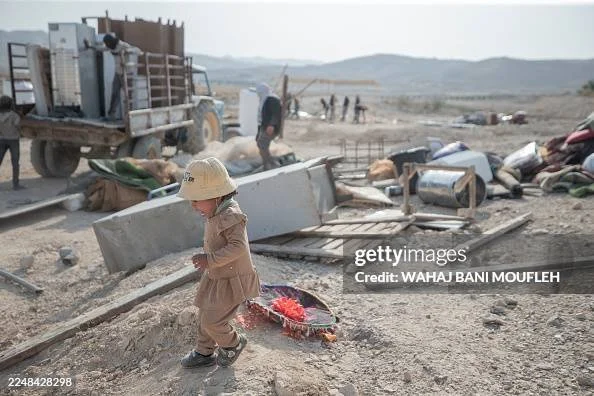
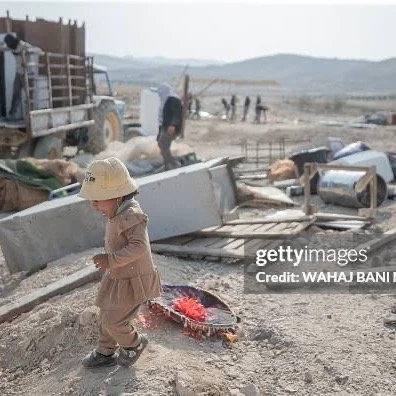
More than 80 percent of buildings across Gaza have been damaged or destroyed during the war, according to UN figures, forcing massive displacement. Families now returning to the cities where they previously lived, camp in the rubble of ruined apartment buildings. Families sheltering in tents worn out from displacements are now suffering from heavy winter rains which have submerged tens of thousands of tents across Gaza, soaking bedding and clothing and ruining supplies. The United Nations confirmed more than 13,000 households were affected within hours after the first rain started.

Aid groups warned in early November that about 260,000 Palestinian families, totaling nearly 1.5 million people, faced vulnerability as winter approached. Following a complete blockade on shelter items for six months, needs across Gaza remain overwhelming. Since the ceasefire announcement, aid organizations have begun delivering essential assistance such as tents and tarpaulins, but far more is required to meet the urgent needs of the people lacking adequate shelter. The UN Secretary-General’s spokesperson said “millions” of urgently needed shelter items are still stuck in Jordan, Egypt and Israel, waiting for approval to enter the enclave.

Please pray that 9-year-old Khalid has adequate protection from the cold and rain- in a tent or other structure. Pray that he has a warm blanket and dry mattress. Pray that he shelters with family members who love him and comfort him. Pray that he does not suffer from exhaustion and despair. Pray that he experiences God’s peace and love.