LET CHILDREN LIVE. PLEASE PRAY FOR KHALID
Southminster has joined Churches for Middle East Peace (CMEP) Let Children Live campaign to pray and advocate for the children of Palestine.
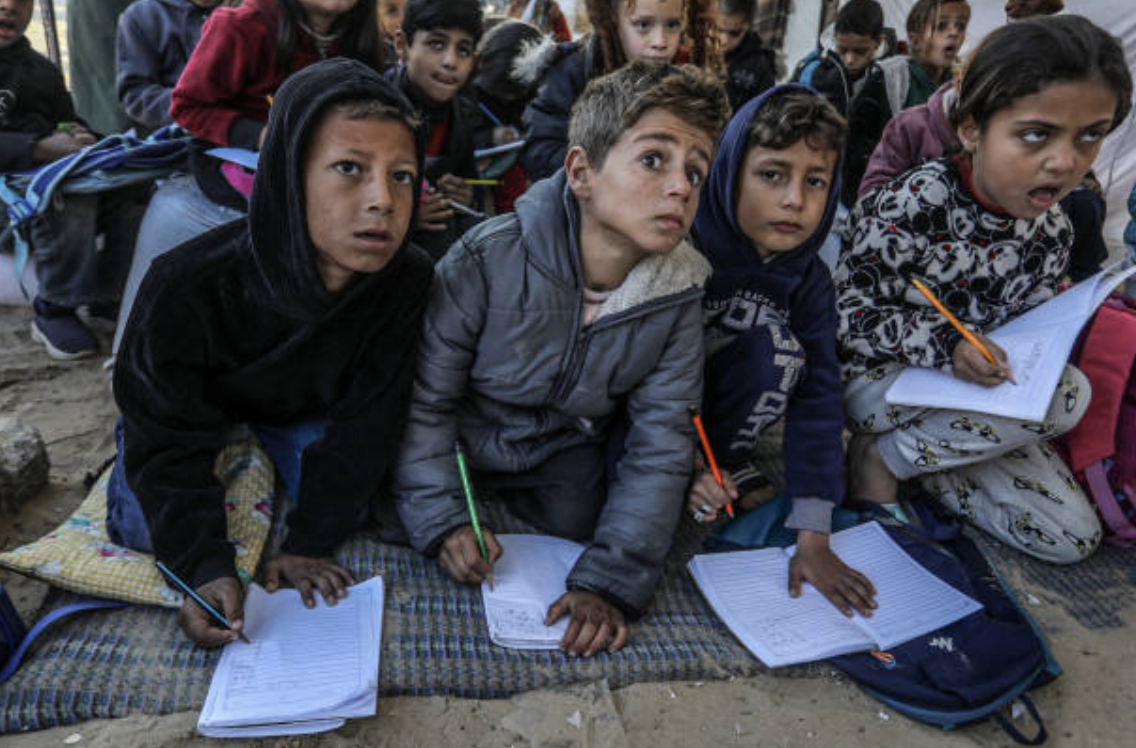
We have received the name of a child to lift in prayer and advocacy. Our child is 9-year-old Khalid. We do not have his photo. We can only imagine the reality of his life. Please begin praying today that Khalid may live and that he may know peace.
Please pray that Khalid gets the nutrition he needs each day
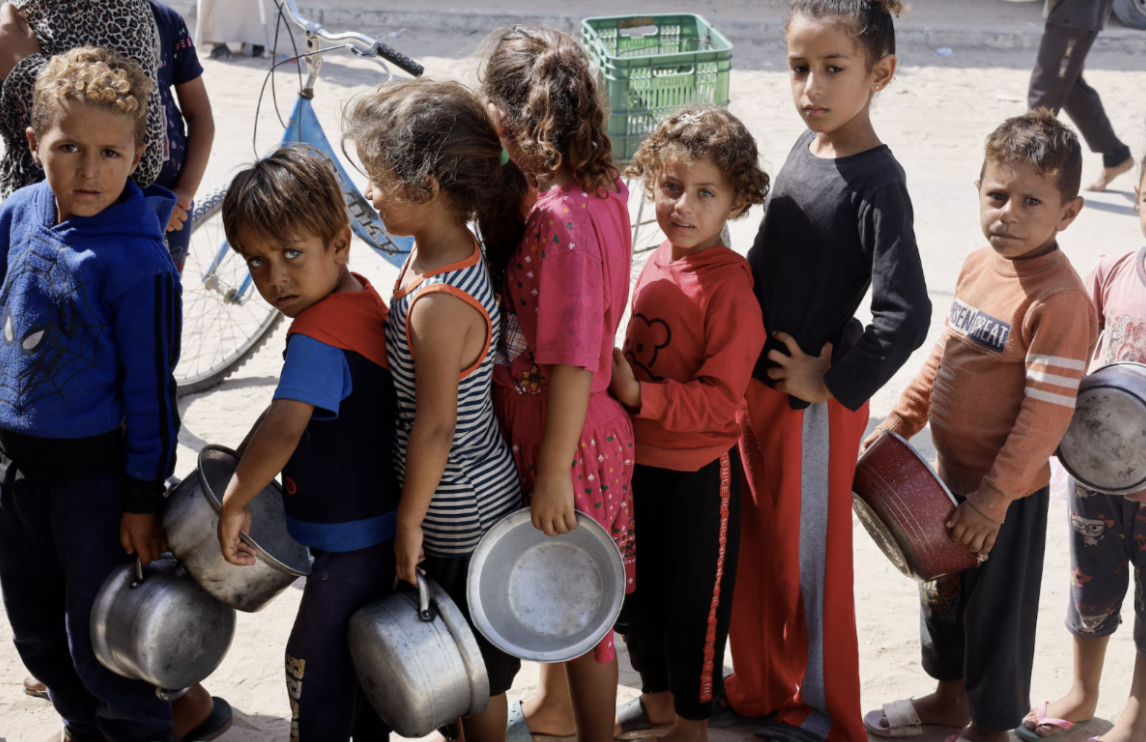
Please pray that Khalid and his family are able to access nutritious food to sustain life and growth. Please pray they continue to receive uninterrupted food supplies which give hope to Khalid and his family. Please pray that any family food supplies remain safe from soaking winter rains. Please pray that supplies of food stuffs including meat, chicken and fresh vegetables are able to enter Gaza without challenge and swiftly be distributed. Please give thanks to God for all the UN partner organizations providing general food assistance and for the 208 community kitchens providing nutritious hot meals to Gazans.
The food situation in Gaza
In August 2025 the World Food Program (WFP) indicated that over half a million people in the Gaza Strip- including children- were facing catastrophic hunger- characterized by starvation, destitution and death- and over 1 million more were facing Emergency levels of food insecurity. This represents the vast majority of the population of Gaza.
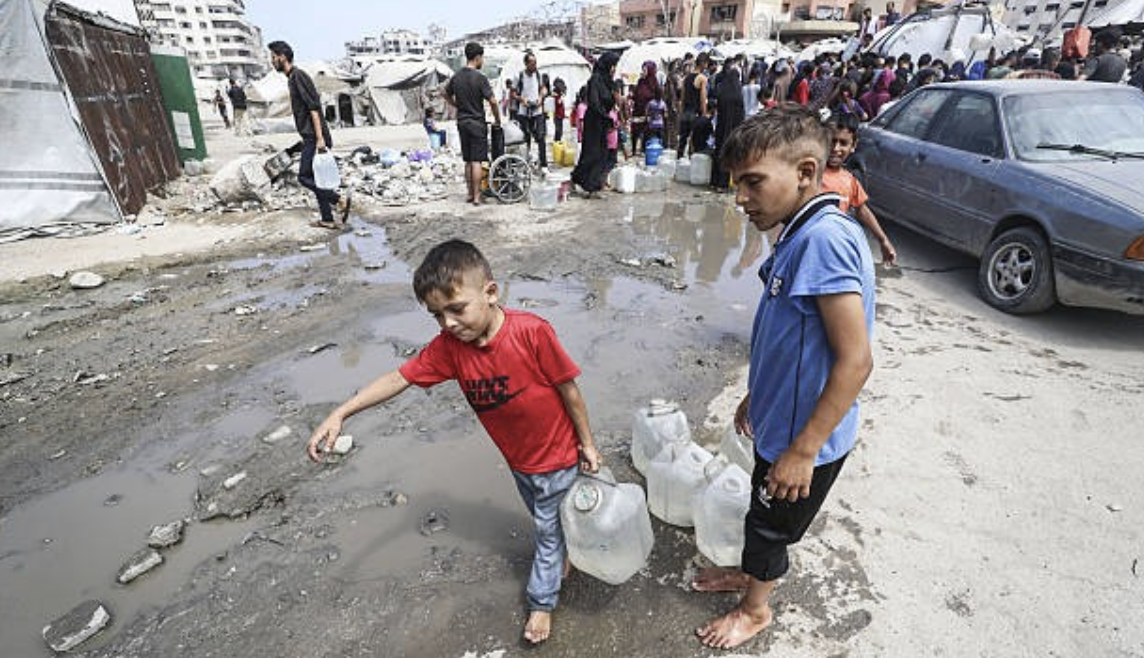
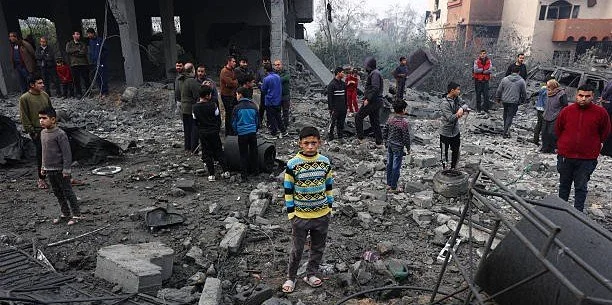
In October 2025 WFP reported the Palestine/ Israeli conflict has led to a complete collapse of Gaza’s food production, job market, economy and infrastructure. More than 80% of Gaza’s farms, bakeries and food storage facilities have been destroyed. Virtually all marketplaces, grocery stores and restaurants are closed or destroyed. Jobs at fisheries and farms, once major sources of employment, are gone. After two years of war, most Gazans no longer have any cash so cannot afford what little food might be available. These catastrophic conditions have left Gazans dependent on humanitarian aid.
The ceasefire opens a critical window for WFP to scale up and deliver lifesaving food, but it will take months to reverse famine and pull people back from starvation. Hundreds of thousands of families remain displaced. Most are returning to find their homes completely destroyed, damaged or unsafe. Severely malnourished women and children need specialized, weeks-long treatment to recover.
In the first half of December the UN Office for Coordination of Humanitarian Affairs (OCHA) reported the following:
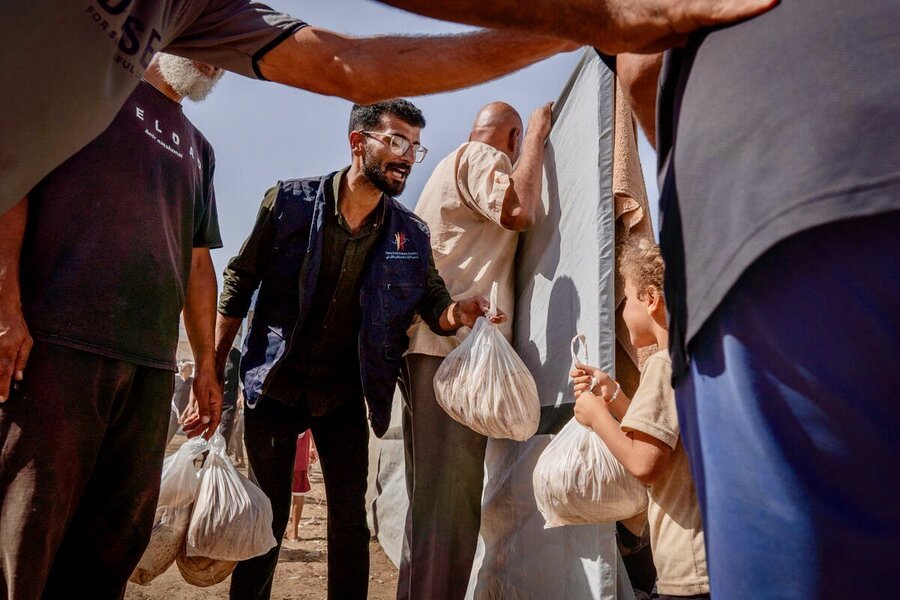
In the first 10 days of December, Food Security Sector partners reached 73,000 households (about 365,000 people) with the monthly cycle of general food assistance via 60 distribution points across the Strip. This represents 17 per cent of the 2.1 million people that partners aim to reach with household-level food distributions each month.
As of 10 December, 1,571,000 meals continued to be prepared and delivered daily by 26 partners through 208 kitchens - 366,000 meals by 45 kitchens in the north and 1,205,000 meals by 163 kitchens in south central Gaza.
Since 12 December, due to limited supplies caused by challenges to humanitarian aid entering Gaza, UN partners have been unable to maintain the standard family ration of two food parcels and one 25-kilogram flour bag (covering 75 per cent of minimum caloric needs). For the remainder of the month, the ration has been reduced to one food parcel, one flour bag, and 1.5 kilograms of high-energy biscuits, covering approximately 50 per cent of minimum caloric needs per family.
On 5 December, for the first time since August 2024, some 3,500 veterinary kits entered Gaza via UN coordination. On 9 December, the first day of the kits’ distribution, over 130 herders received essential supplies to support the health of their animals. Since 10 October, UN partners have also supplied fodder to 1,700 animal herders to sustain surviving livestock and enable the resumption of local production of milk and dairy products.
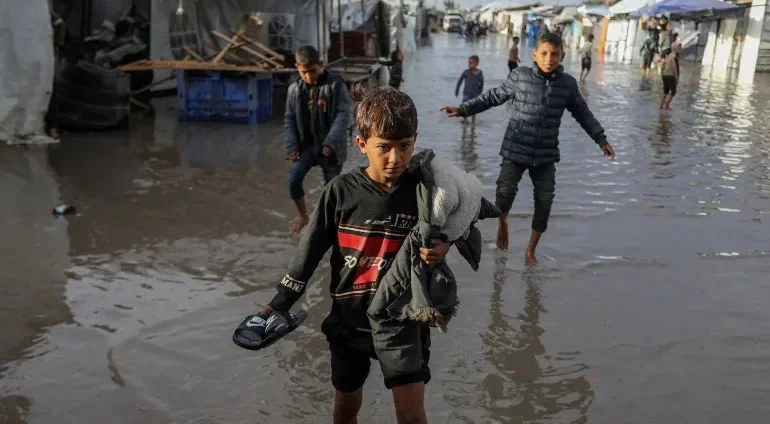
In addition to soaking Gazans tents, blankets, clothing and any food supplies, winter rains in Gaza periodically impact the functioning of community kitchens and of aid distribution.